The independent appliance repair shop across the Mid-South
A Refrigerator That Won't Cool
If your refrigerator is running but the food is warm, the problem is almost always airflow, dirty coils, or the sealed cooling system, and we can sort out which one. This is one of the calls we take most: the light works, you hear a hum, but the milk is warm and the freezer feels more like a cool closet. Below is what it usually means and what you can safely check before you call.
Call (800) 712-6387- A real person answers
- Open 7 days
- Written quote before work starts
Taking calls until 5:00 PM CT
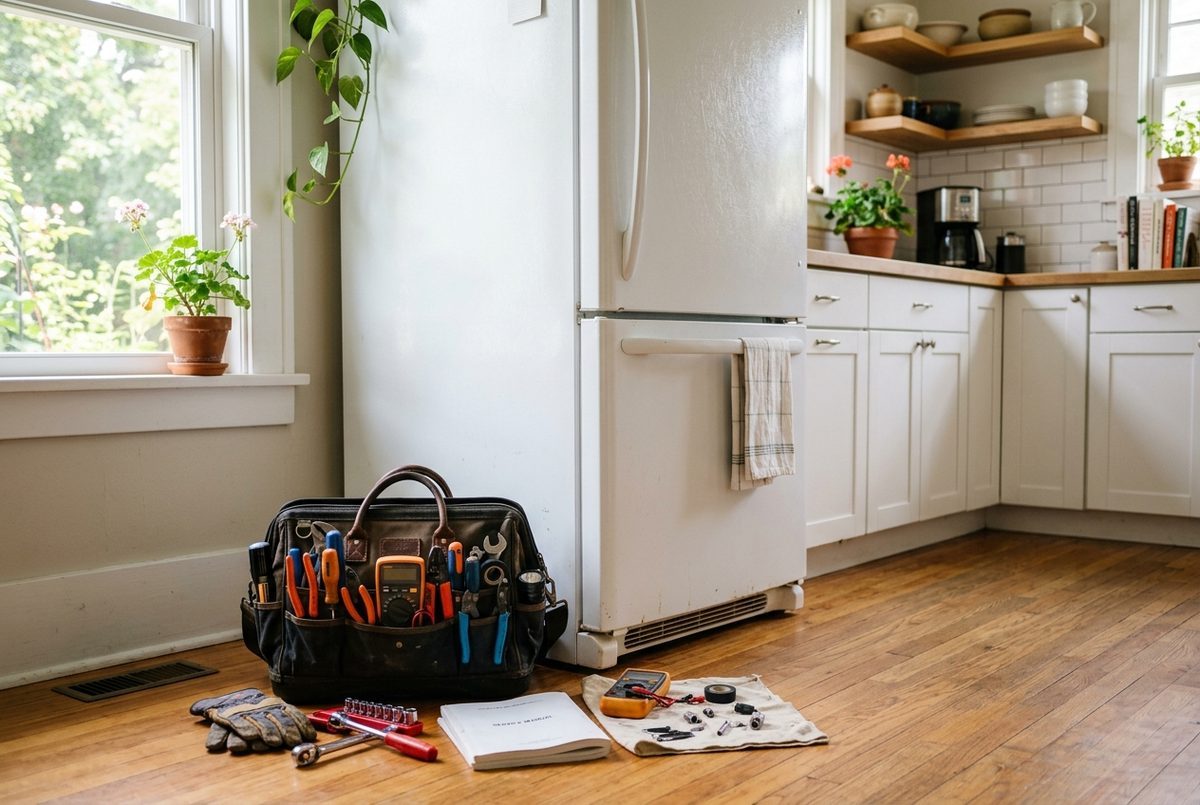
M&G Appliance Repair service team · field-reviewed before publishing
What "not cooling" actually tells us
A fridge doesn't make cold. It moves heat out of the box. So when the inside warms up, either air isn't moving, heat isn't leaving the coils, or the sealed system lost its ability to pull heat at all. The clues matter. Freezer cold with a warm fridge points one direction, both compartments warm points another, and warm with frost stacked up on the back wall points somewhere else again. Write down what you see and hear before you call us. It shortens the visit and helps us bring the right part.
Cause family one: airflow and frost
This is the common one, and the cheapest to fix. Most fridges cool the fresh-food side by blowing cold air over from the freezer, so block that path and the fridge warms while the freezer stays fine. Blockages come from grocery bags shoved against the back vent, a door gasket that quit sealing, or frost that grew over the evaporator after a defrost part failed. You might hear the fan running louder than usual. You might find ice on the freezer's back panel or water pooling in a crisper drawer. Once airflow is cleared, temperatures often come back the same day.
Cause family two: dirty coils and a struggling condenser
Under or behind your fridge sits a coil that dumps heat into your kitchen. Coat it in dust, pet hair, or the fine grit that drifts in around here after a windy tornado-season week, and that heat has nowhere to go. The compressor runs longer and longer, and the box slowly warms. Homes on well water sometimes see mineral dust settle heavier too. A condenser fan that stopped spinning causes the same thing. You'll usually feel odd heat along the side or back cabinet, and the unit almost never shuts off.
Cause family three: controls and the sealed system
Above the cheap fixes sit the electrical controls: thermistors, the main board, a start relay, a compressor that hums and clicks back off. Those need meters and readings, not guesswork. Below that is the sealed refrigerant system. A leak or a blocked line means the fridge runs constantly and barely cools, and that work takes recovery equipment and licensing. This is also where the swap-vs-fix talk happens. We install appliances as well as repair them, so we'll tell you plainly when a sealed-system job on an older unit isn't worth your money.
Safe checks you can do right now
Start with power. Pull the plug for a moment, then test the outlet with a lamp. Check the temperature dials, since kids and grocery boxes move them. Feel the door gaskets for gaps and slide a dollar bill in to see whether it grips. Vacuum what dust you can reach at the grille along the bottom front, and move food back off the interior vents. Listen for a fan. Don't remove interior panels, stay out of the compressor area, and leave refrigerant lines alone. Still warm a few hours later? Call us and tell us what you found.
A Refrigerator That Won't Cool — what people ask
My freezer is cold but the fridge isn't. Is that a good sign?
Usually yes. It means the cooling system still works and air isn't reaching the fresh-food side. Frost buildup, a stalled evaporator fan, or a defrost fault are the usual culprits, and those are often repairable without touching refrigerant.
Should I empty the fridge before you arrive?
Move perishables to a cooler or a neighbor's fridge if it's been warm several hours. Leave the rest where it is. We do need clear access to the back and bottom of the unit, so pull nearby items aside.
When is replacing the fridge the smarter call?
When a sealed-system repair lands on an older unit, or when the compressor has failed. We install too, so we'll walk you through both paths and let you decide without pressure.
How it works
- Step 1
Tell us the symptom
Describe what you hear, see, or smell. Grinding, leaking, no heat, an error code on the panel. Those details let us load likely parts on the van before we ever pull into your driveway.
- Step 2
We diagnose in person
Our technician tests the machine, checks power and water lines, and finds the part that actually failed. Well-water sediment and clogged valves fool a lot of guesswork. We confirm the cause before touching a wrench.
- Step 3
Fix it or swap it
You get the honest read. Some machines need one part and have years left in them. Others are worn past sense. Because we also install, we can set the replacement level and connected on the same visit.
- A real person answers
- Open 7 days
- Written quote before work starts
Why homeowners call us
- Two families, one crewWe are not a call center routing tickets to strangers. The person answering the phone knows the technicians by name, and you get the same small group of hands in your kitchen and laundry room every time.
- Straight swap-vs-fix talkInstallers see what breaks in year two. Repair techs see what lasts a decade. We do both, so we will tell you when a repair makes sense and when your money belongs in a new machine instead.
- Storm season readyTornado season brings surges, outages, and flooded utility rooms. Control boards fry, and motors seize after water sits. We stock common boards and dry-run every machine before we leave, so you are not calling us back next week.
- Well water experienceSediment and hard minerals wreck inlet valves, dishwasher jets, and ice makers. We see it constantly out past the city lines. We clean, we replace, and we show you the filter habit that keeps the same failure from coming back.
- All major brands, gas & electricEvery major appliance brand, gas and electric, handled by an independent shop.
- Straight answersIf it isn't worth repairing, we'll say so, often right on the phone.
About this guide
If the safe checks didn't fix it, the fault is real
Describe what you found and we'll take it from there. Booking takes about a minute.
- A real person answers
- Open 7 days
- Written quotes
- All major brands
- Gas & electric
Rather not call? Get a free quote →