The independent appliance repair shop across the Mid-South
Electric Cooktop Element Not Heating
If one burner on your electric cooktop won't heat, the fault is usually the element, the receptacle block it plugs into, or the switch behind the knob. You turn the knob, the light comes on, and nothing. Or the coil glows a minute and quits while the other three cook fine. That mix of almost-working and dead is what confuses people. Here's how we trace it, and what you can safely check before you call us.
Call (800) 712-6387- A real person answers
- Open 7 days
- Written quote before work starts
Taking calls until 5:00 PM CT
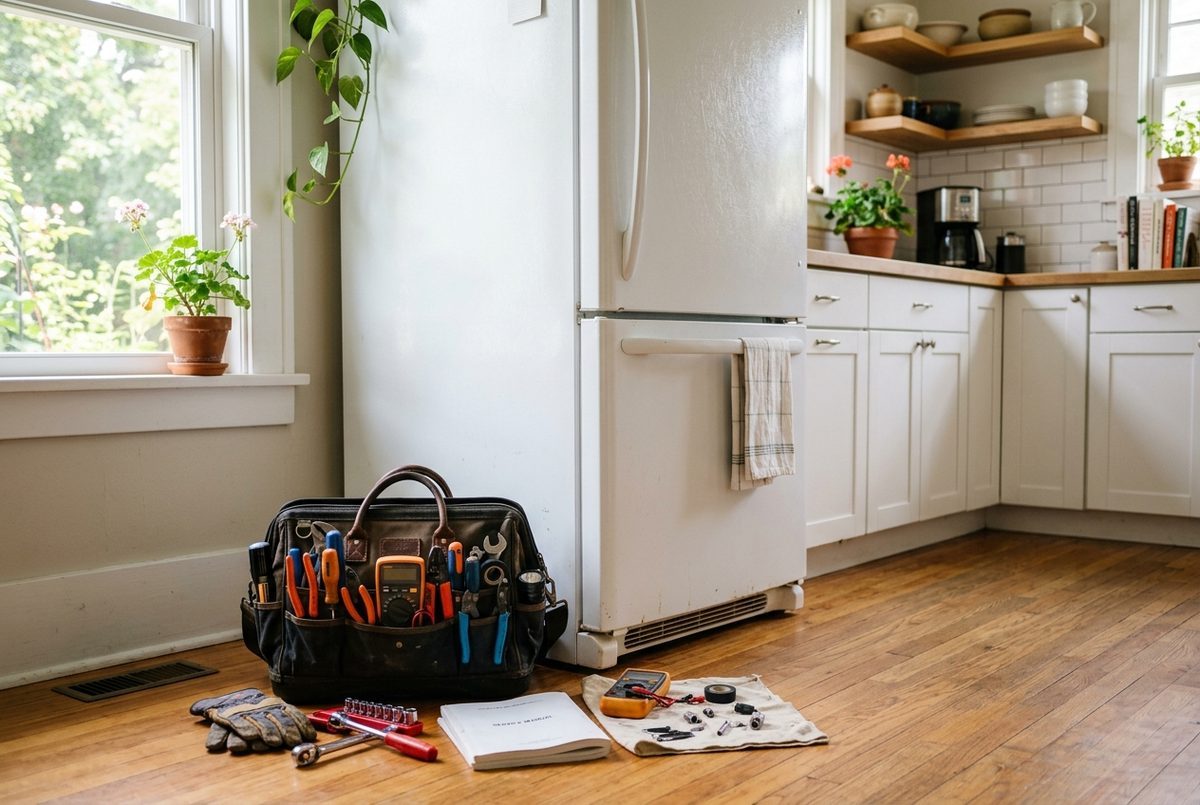
M&G Appliance Repair service team · field-reviewed before publishing
What a dead element is really telling you
An electric element needs a good connection, a switch telling it how hot to get, and power arriving at both legs. When one burner is out and the rest cook fine, the trouble is almost always local to that burner, not the whole cooktop. When two burners die at once, or every element runs weak, we start looking upstream at the power feed. So the first thing we ask on the phone is simple. One burner or several? That answer splits the job into two very different repairs.
The usual suspects, cheapest first
Start with the coil itself on a plug-in style cooktop. Coils burn open, and the terminals pit and blacken from spills. Next is the receptacle block the coil plugs into, since heat cooks those contacts until they quit passing current. Third is the infinite switch behind the knob, which wears out and either cycles wrong or never closes. Fourth, and least common, is the wiring or the power supply, including a partly tripped double-pole breaker. On smooth-top glass cooktops the coil is a sealed radiant element under the glass, so the middle two steps change but the order holds.
Safe checks you can do right now
Turn the knob and watch. Does the indicator light come on? Does the element glow at all, even faintly? Try a different pan, because a warped bottom feels cold even when the burner works. On a plug-in coil cooktop, let everything cool all the way down, then lift the coil and look at the two prongs. Charred, silver-melted, or loose prongs tell the story. Push it back in firmly and try again. Then check your breaker panel for a breaker that looks on but feels soft. That's all. Don't pull screws, don't slide the cooktop out, and don't probe anything with the power on.
What we do differently on site
We test rather than guess. A meter across the element tells us in seconds whether the coil is open or intact. We read both legs of the 240-volt supply and check continuity through the infinite switch on each setting, then look for heat damage at the terminal block that a visual check misses. On radiant tops we also check the glass for hairline cracks, since a cracked surface changes the plan. We install cooktops as well as fix them. So when the switch, block, and element all show heat damage on an older unit, we'll say so plainly instead of selling you three parts.
When repair makes sense and when a swap does
A single burned coil or a scorched receptacle block is a straightforward part swap, worth doing on almost any cooktop. Same with one bad infinite switch. Where we slow down is a glass radiant top with a cracked surface, or an older unit where several elements have already failed and the wiring insulation has gone brittle from years of heat. Parts availability matters at that point too. We'll lay out what the fix involves and what a new cooktop install looks like in your counter opening, then let you decide. Call us and tell us the model and which burner is out.
Electric Cooktop Element Not Heating — what people ask
Why does my burner glow for a minute then go cold?
Usually the infinite switch cycling wrong, or a weak connection at the terminal block that heats up and breaks contact. The element itself is often fine. It has to be tested under load to know which one.
Can I just buy a replacement coil and plug it in myself?
On plug-in coil cooktops, swapping a cool coil is low risk. But if the receptacle block underneath is charred, the new coil will burn out too. Get the block checked before you spend money on parts.
Two burners quit at the same time. Is that the same problem?
Probably not. Two burners going together usually points to one leg of the 240-volt supply, either a breaker issue or a feed problem, rather than the elements. That's a power-side diagnosis, not a parts swap.
How it works
- Step 1
Tell us the symptom
Describe what you hear, see, or smell. Grinding, leaking, no heat, an error code on the panel. Those details let us load likely parts on the van before we ever pull into your driveway.
- Step 2
We diagnose in person
Our technician tests the machine, checks power and water lines, and finds the part that actually failed. Well-water sediment and clogged valves fool a lot of guesswork. We confirm the cause before touching a wrench.
- Step 3
Fix it or swap it
You get the honest read. Some machines need one part and have years left in them. Others are worn past sense. Because we also install, we can set the replacement level and connected on the same visit.
- A real person answers
- Open 7 days
- Written quote before work starts
Why homeowners call us
- Two families, one crewWe are not a call center routing tickets to strangers. The person answering the phone knows the technicians by name, and you get the same small group of hands in your kitchen and laundry room every time.
- Straight swap-vs-fix talkInstallers see what breaks in year two. Repair techs see what lasts a decade. We do both, so we will tell you when a repair makes sense and when your money belongs in a new machine instead.
- Storm season readyTornado season brings surges, outages, and flooded utility rooms. Control boards fry, and motors seize after water sits. We stock common boards and dry-run every machine before we leave, so you are not calling us back next week.
- Well water experienceSediment and hard minerals wreck inlet valves, dishwasher jets, and ice makers. We see it constantly out past the city lines. We clean, we replace, and we show you the filter habit that keeps the same failure from coming back.
- All major brands, gas & electricEvery major appliance brand, gas and electric, handled by an independent shop.
- Straight answersIf it isn't worth repairing, we'll say so, often right on the phone.
About this guide
If the safe checks didn't fix it, the fault is real
Report what you saw during the checks and we handle the rest. A minute to book.
- A real person answers
- Open 7 days
- Written quotes
- All major brands
- Gas & electric
Rather not call? Get a free quote →