The independent appliance repair shop across the Mid-South
Oven Running Hot or Cold
If your oven says 350 but bakes like it isn't, the fix is usually a sensor, a gasket, or a calibration setting, not a new range. Cookies burn on the bottom and stay raw in the middle. A casserole takes an extra half hour. Temperature drift is one of the calls we get most, and it's almost always a small part. Here's how to think it through before you call us.
Call (800) 712-6387- A real person answers
- Open 7 days
- Written quote before work starts
Taking calls until 5:00 PM CT
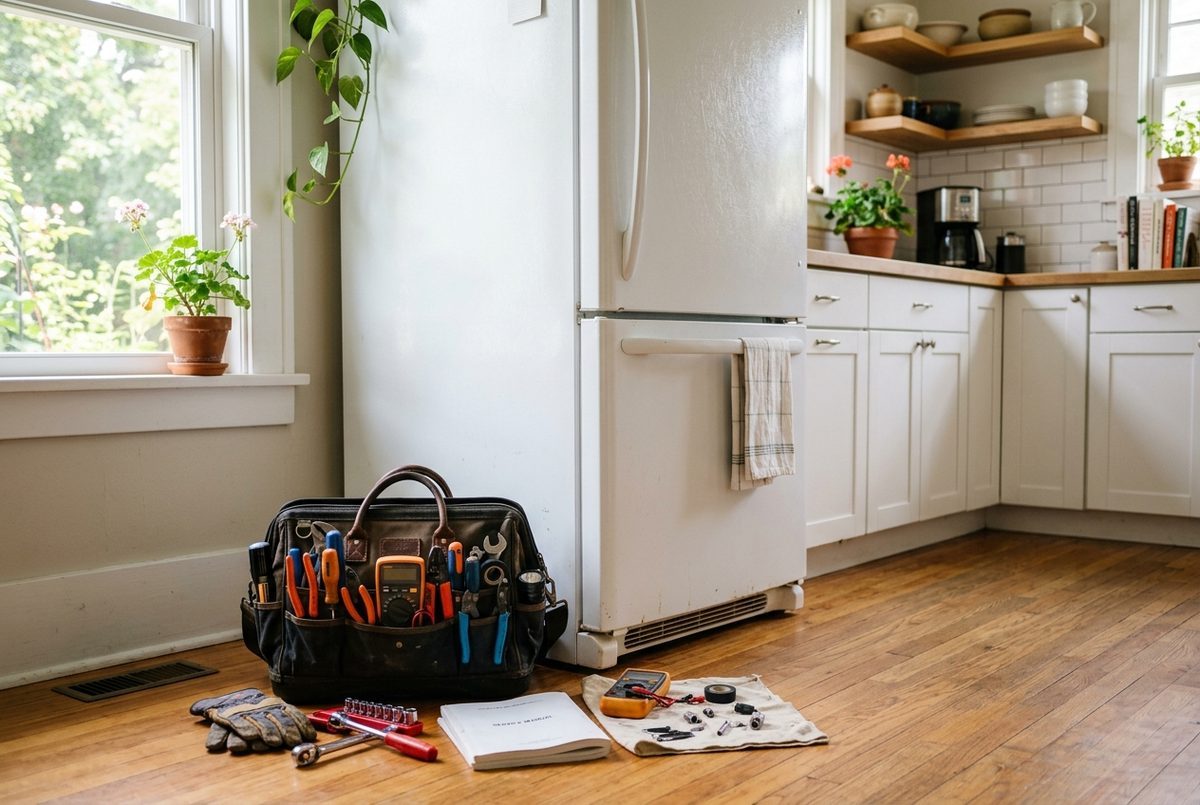
M&G Appliance Repair service team · field-reviewed before publishing
What "running hot or cold" actually means
An oven doesn't hold one steady temperature. It cycles. Heat climbs past your setting, shuts off, drifts down, then kicks back on. A healthy oven swings maybe 25 degrees either side of the number and you never notice. Drift turns into a problem when the average is off, or when the swing gets wide. Off average means everything bakes wrong in the same direction. Wide swings mean scorched edges with soft centers. Knowing which one you've got tells us a lot. Bread and cake show it fastest. Roasts and casseroles hide it, because they forgive.
Start with the cheap causes
The temperature sensor is a thin metal probe sticking into the cavity, usually upper left. It drifts with age and starts reading wrong. Common fix, and not an expensive one. Then there's the door. A crushed or hardened gasket lets heat leak out and the oven chases it forever, and a sagging hinge that holds the door open a hair does the same. Racks in the wrong positions and a heavy stone slab on the oven floor throw heat around too. On gas models, a worn igniter gets lazy, the burner lights late, and the oven never catches up.
When it's the control board or calibration
Most ovens let you shift the calibration a set number of degrees in the settings menu, and your manual explains how. That's the right answer when the oven runs consistently 15 or 25 degrees off but cycles fine otherwise. It's the wrong answer when the oven is wildly unstable. Control boards do fail, especially after a lightning hit, and around here tornado season brings plenty of those. A board that misreads the sensor or sticks a relay closed will run hot and keep running. That's where we start talking about the age of the range and whether repair or replacement makes more sense.
Safe checks you can do right now
Buy an oven thermometer and hang it from the center rack. Set 350, wait 20 minutes past the preheat beep, then read it. Read it again 10 minutes later. Write both numbers down, because that's the data we want. Next, close the door on a dollar bill and tug. If it slides right out, the gasket is tired. Carefully run a hand around the closed door and feel for escaping heat. Look the gasket over for cracks, gaps, or flattened spots. Pull out any pizza stone or foil covering the bottom. Keep panels closed and leave gas connections alone. Those are ours.
What we do that you can't from the front
We put a calibrated probe in the cavity and log a full cycle, so we see the whole swing instead of one number. We meter the sensor's resistance cold and compare it to spec, which tells us whether it's lying before we replace anything. We check the elements or burner for even output, test the relays on the board, and pull the door off to look at hinge geometry. Because we install ranges too, we'll be straight with you when a 20-year-old oven needs three parts. Sometimes fixing is smart. Sometimes it isn't. Call us and we'll walk through it.
Oven Running Hot or Cold — what people ask
Can I just set my oven 25 degrees higher and live with it?
For a while, yes, if the drift is steady. It won't do anything for wide swings, though, and a failing sensor usually gets worse. You'll be guessing again in a few months. A calibration adjustment is cleaner.
Why does my oven bake unevenly even when the temperature is right?
That's airflow, not calibration. A blocked vent, a foil-covered floor, or crowded racks trap heat in pockets. In a convection oven, a weak fan does the same thing. Different problem, different fix.
Is a wrong oven temperature worth repairing on an older range?
Often yes, since sensors and gaskets are minor parts. We get more cautious when the control board is involved on a range well past a decade old, and we'll tell you honestly which way we'd lean.
How it works
- Step 1
Tell us the symptom
Describe what you hear, see, or smell. Grinding, leaking, no heat, an error code on the panel. Those details let us load likely parts on the van before we ever pull into your driveway.
- Step 2
We diagnose in person
Our technician tests the machine, checks power and water lines, and finds the part that actually failed. Well-water sediment and clogged valves fool a lot of guesswork. We confirm the cause before touching a wrench.
- Step 3
Fix it or swap it
You get the honest read. Some machines need one part and have years left in them. Others are worn past sense. Because we also install, we can set the replacement level and connected on the same visit.
- A real person answers
- Open 7 days
- Written quote before work starts
Why homeowners call us
- Two families, one crewWe are not a call center routing tickets to strangers. The person answering the phone knows the technicians by name, and you get the same small group of hands in your kitchen and laundry room every time.
- Straight swap-vs-fix talkInstallers see what breaks in year two. Repair techs see what lasts a decade. We do both, so we will tell you when a repair makes sense and when your money belongs in a new machine instead.
- Storm season readyTornado season brings surges, outages, and flooded utility rooms. Control boards fry, and motors seize after water sits. We stock common boards and dry-run every machine before we leave, so you are not calling us back next week.
- Well water experienceSediment and hard minerals wreck inlet valves, dishwasher jets, and ice makers. We see it constantly out past the city lines. We clean, we replace, and we show you the filter habit that keeps the same failure from coming back.
- All major brands, gas & electricEvery major appliance brand, gas and electric, handled by an independent shop.
- Straight answersIf it isn't worth repairing, we'll say so, often right on the phone.
About this guide
Checked everything on the list and it still acts up?
Tell us what you tried and what it did. The booking itself takes a minute.
- A real person answers
- Open 7 days
- Written quotes
- All major brands
- Gas & electric
Rather not call? Get a free quote →