The independent appliance repair shop across the Mid-South
How Hard Water Quietly Shortens an Appliance's Life
Hard water and well sediment are what's behind the dishwasher that won't dry, the film on your glasses, and the washer that takes forever to fill. In much of Arkansas and the states around us, the water carries minerals, and on wells it also carries fine sediment. Both settle inside your appliances a little at a time. You didn't do anything wrong. Here's what's happening and how to stop it.
Call (800) 712-6387- A real person answers
- Open 7 days
- Written quote before work starts
Taking calls until 5:00 PM CT
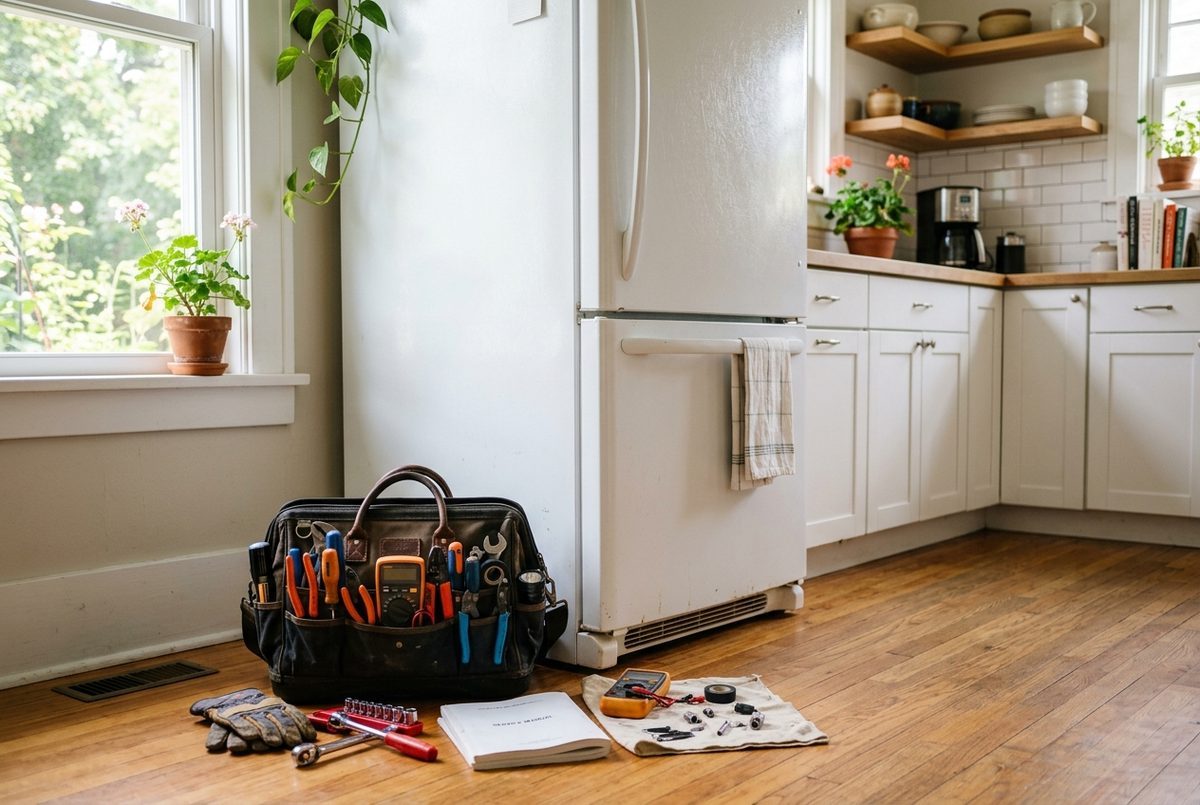
M&G Appliance Repair service team · field-reviewed before publishing
What minerals do while you're not looking
Every time hard water heats up or evaporates, it leaves calcium and magnesium behind. Inside a water heater or a dishwasher, that becomes a crusty shell on the heating element. A coated element has to run longer to hit the same temperature, so cycles drag and dishes come out damp. In washers, buildup narrows the inlet screens until fill time doubles. On well water you get sand-like grit on top of that, and it wears valve seats and jams pump seals. None of it happens overnight, which is the real trouble. By the time you notice a symptom, that part has been struggling for a year or more. Call us if the symptoms below sound familiar.
The habit that actually prevents it
Run something acidic through the machine on an empty cycle. White vinegar works, so does a store-bought descaler. In a dishwasher, stand a cup of vinegar upright on the top rack and run the hottest cycle with no detergent and nothing else inside. In a washer, use the clean-machine cycle with a descaler, or hot water and vinegar if your machine has no such setting. Then wipe the door seal and rinse the dishwasher's bottom filter under the tap. Pull the filter, rinse the mesh, drop it back in. No tools, no panels to come off. That ten minutes handles most of the mineral load before it hardens.
How often, honestly
City water with moderate hardness, once every three months. If hardness is obvious, meaning white rings in the toilet and spots on the shower door, make it monthly. Well water with sediment: monthly, and check the whole-house filter cartridge on whatever schedule your installer gave you. Look at the ice maker twice a year. Cloudy, small, or hollow cubes usually mean scale in the fill line. If you have a softener, don't assume you're off the hook. Salt runs out and resin wears down. One hardness test strip a season tells you whether the softener is still doing its job.
Signs prevention time has passed
Watch for a dishwasher that leaves gritty white residue no rinse aid will fix, or a washer that fills so slowly the cycle times out. A water heater that pops and rumbles as it heats is water boiling under a bed of minerals. Ice cubes going cloudy or shrinking counts too. Any of that means scale has built where vinegar can't reach, and that's a service call instead of a cleaning cycle. We pull inlet valves, flush lines, and check screens. Sometimes the element is too far gone and we'll tell you. Reach us and describe the symptom in plain words.
When we'd tell you to replace instead
We install as well as repair, so here's the straight version. On a machine under about seven years old, descaling plus a valve or element swap usually makes sense, since the rest of the appliance still has life in it. Past ten or twelve years with heavy scale, mineral damage rarely stops at one part. The bearings, seals, and pumps have all been chewing on the same grit. We'll look, tell you what's worn, and lay out both paths. If replacement is the smarter money, we'll say so, even though the repair is the easier job for us.
How Hard Water Quietly Shortens an Appliance's Life — what people ask
Will a water softener fix appliances that are already scaled up?
It stops new buildup, but it won't dissolve what's already in there. Existing scale has to be flushed out or the part replaced. Put in the softener, then have the machines descaled or serviced so you're starting clean.
Is vinegar safe for my dishwasher?
An occasional vinegar cycle is fine in most machines. Using it weekly can harden the rubber seals over time. Monthly is plenty. If you'd rather not, use a commercial descaler made for dishwashers.
Why does my well water hurt appliances more than city water?
Wells often carry hardness minerals and fine sediment both. The grit wears valves and pump seals, not just heating elements. A whole-house sediment filter, changed on schedule, makes a real difference.
How it works
- Step 1
Tell us the symptom
Describe what you hear, see, or smell. Grinding, leaking, no heat, an error code on the panel. Those details let us load likely parts on the van before we ever pull into your driveway.
- Step 2
We diagnose in person
Our technician tests the machine, checks power and water lines, and finds the part that actually failed. Well-water sediment and clogged valves fool a lot of guesswork. We confirm the cause before touching a wrench.
- Step 3
Fix it or swap it
You get the honest read. Some machines need one part and have years left in them. Others are worn past sense. Because we also install, we can set the replacement level and connected on the same visit.
- A real person answers
- Open 7 days
- Written quote before work starts
Why homeowners call us
- Two families, one crewWe are not a call center routing tickets to strangers. The person answering the phone knows the technicians by name, and you get the same small group of hands in your kitchen and laundry room every time.
- Straight swap-vs-fix talkInstallers see what breaks in year two. Repair techs see what lasts a decade. We do both, so we will tell you when a repair makes sense and when your money belongs in a new machine instead.
- Storm season readyTornado season brings surges, outages, and flooded utility rooms. Control boards fry, and motors seize after water sits. We stock common boards and dry-run every machine before we leave, so you are not calling us back next week.
- Well water experienceSediment and hard minerals wreck inlet valves, dishwasher jets, and ice makers. We see it constantly out past the city lines. We clean, we replace, and we show you the filter habit that keeps the same failure from coming back.
- All major brands, gas & electricEvery major appliance brand, gas and electric, handled by an independent shop.
- Straight answersIf it isn't worth repairing, we'll say so, often right on the phone.
About this guide
If the safe checks didn't fix it, the fault is real
Tell us what you tried and what it did. The booking itself takes a minute.
- A real person answers
- Open 7 days
- Written quotes
- All major brands
- Gas & electric
Rather not call? Get a free quote →