The independent appliance repair shop across the Mid-South
When Fixing the Washer Beats Buying a New One
Whether to fix your washer or replace it comes down to three things we can check on site: what actually failed, how the rest of the machine looks, and whether the part is still available. So call and tell us what it's doing. Right now you've got a drum full of water and a load of towels, and you're standing there wondering if a repair call is throwing money at a lost cause. Fair question. Here's how we work through it.
Call (800) 712-6387- A real person answers
- Open 7 days
- Written quote before work starts
Taking calls until 5:00 PM CT
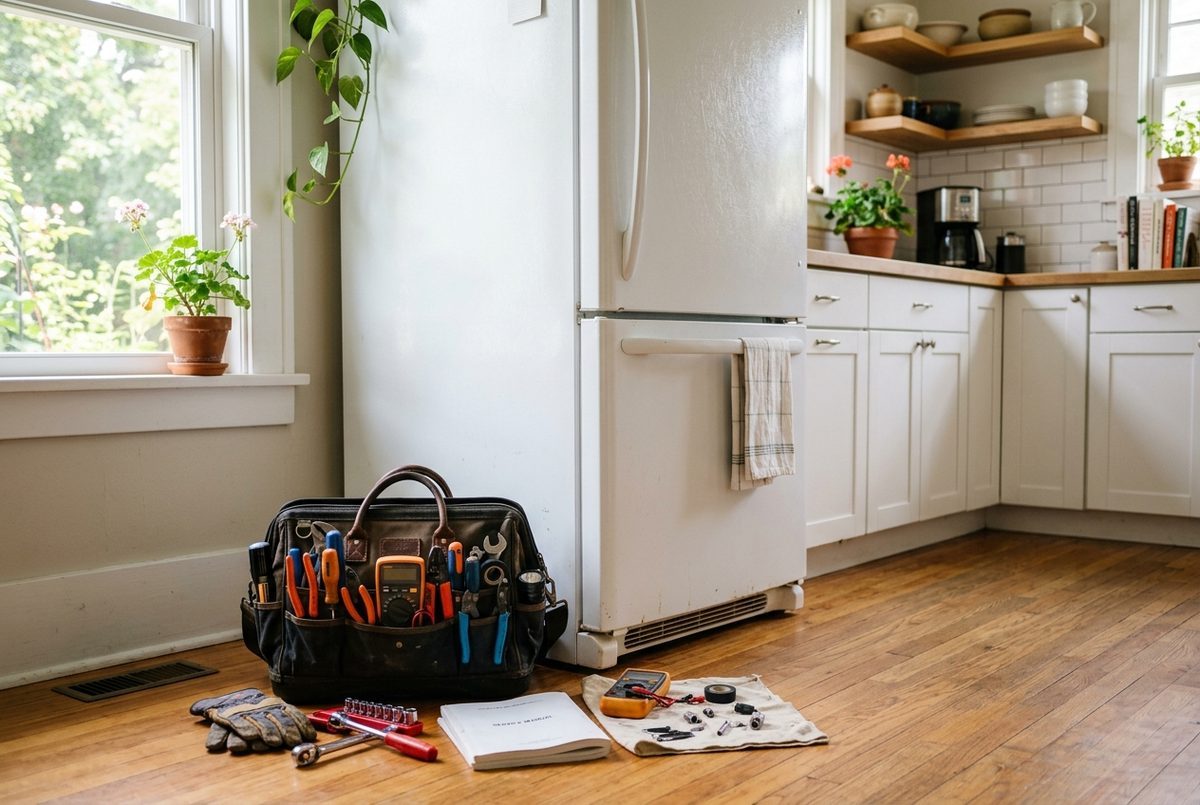
M&G Appliance Repair service team · field-reviewed before publishing
Age matters, but not the way you'd think
A washer's age tells us something, not everything. Most home washers give solid service for a decade or so, longer if the water is kind to them. Around here that's the catch. Well water carries sediment and minerals that build up in valves, hoses, and pumps. A five-year-old machine on hard well water can be more worn out than a ten-year-old unit running on treated city water. So we look at the machine, not the birthday. If the tub bearing is quiet, the cabinet is solid, and the drive system feels healthy, age by itself doesn't condemn it.
The fault type tells us most of the story
Some failures are routine. Drain pumps clog with coins and lint. Lid switches and door locks wear out, inlet valves quit opening because sediment packed the screens, belts stretch, and control boards lose a function. Those are defined repairs on parts built to be replaced. Other failures run deeper. A failed tub bearing, a cracked outer tub, a rusted-through cabinet, or a corroded spider arm in a front-loader means major teardown and a stack of parts. When we tell you a washer is worth fixing, it's usually because the problem is one specific component and not the machine coming apart around it.
Can we still get the parts?
This decides more calls than anything else. Manufacturers stop making parts for older platforms. Sometimes a control board just doesn't exist anymore, or the only ones left are salvage pulls with unknown history. We check availability before we recommend anything. If the part is current and reasonable to source, repair is usually on the table. If it's discontinued, or the lead time stretches out for weeks while you're hauling laundry to a relative's house, we'll say so plainly. No sense stringing you along on a part order that may never ship.
What we're doing during the visit
We run the machine, listen, and watch. Where does it stop? Does it fill, drain, spin? Noise and timing tell us a lot before any tool comes out. Then we test the suspect part and confirm it instead of guessing. Once we have an answer we lay it out for you: here's the failure, here's what the fix takes, here's how the rest of the machine looks. Because we install washers too, we're comfortable telling you when swapping makes more sense. We don't earn anything by talking you into the wrong choice.
When replacement honestly wins
A few cases come up again and again. Bearing failure on a high-mileage front-loader, where the labor is heavy and the surrounding parts are usually tired too. Rust through the tub or cabinet, which we see in damp garages and utility rooms. Two or three major failures landing at once, or a discontinued control board. Storm damage after a tornado-season surge that took out the board and the motor together. One more thing worth saying: if your washer is going on fifteen years and needs a serious repair, a new one plus proper installation may serve you better. We'll help you decide. Call us and describe what it's doing.
When Fixing the Washer Beats Buying a New One — what people ask
How do I know if the noise is a bearing?
A bearing usually growls or roars during spin, and it gets louder as the speed climbs. A rattle or clunk is more often a loose object, worn suspension, or a load that's off balance. Tell us what the sound does at each stage of the cycle.
Does well water really shorten a washer's life?
It can. Sediment clogs inlet valve screens and pump filters, and minerals scale up the internal parts. A whole-house filter helps a lot, and so does cleaning the hose screens now and then. We'll point out what we see while we're there.
Is it worth repairing a washer that's out of warranty?
Often yes, if the failure is one common part and the rest of the machine is sound. Warranty status doesn't change whether a repair is a good idea. The fault type and parts availability do.
How it works
- Step 1
Tell us the symptom
Describe what you hear, see, or smell. Grinding, leaking, no heat, an error code on the panel. Those details let us load likely parts on the van before we ever pull into your driveway.
- Step 2
We diagnose in person
Our technician tests the machine, checks power and water lines, and finds the part that actually failed. Well-water sediment and clogged valves fool a lot of guesswork. We confirm the cause before touching a wrench.
- Step 3
Fix it or swap it
You get the honest read. Some machines need one part and have years left in them. Others are worn past sense. Because we also install, we can set the replacement level and connected on the same visit.
- A real person answers
- Open 7 days
- Written quote before work starts
Why homeowners call us
- Two families, one crewWe are not a call center routing tickets to strangers. The person answering the phone knows the technicians by name, and you get the same small group of hands in your kitchen and laundry room every time.
- Straight swap-vs-fix talkInstallers see what breaks in year two. Repair techs see what lasts a decade. We do both, so we will tell you when a repair makes sense and when your money belongs in a new machine instead.
- Storm season readyTornado season brings surges, outages, and flooded utility rooms. Control boards fry, and motors seize after water sits. We stock common boards and dry-run every machine before we leave, so you are not calling us back next week.
- Well water experienceSediment and hard minerals wreck inlet valves, dishwasher jets, and ice makers. We see it constantly out past the city lines. We clean, we replace, and we show you the filter habit that keeps the same failure from coming back.
- All major brands, gas & electricEvery major appliance brand, gas and electric, handled by an independent shop.
- Straight answersIf it isn't worth repairing, we'll say so, often right on the phone.
About this guide
Safe checks done and it still misbehaves? That's a real fault
Report what you saw during the checks and we handle the rest. A minute to book.
- A real person answers
- Open 7 days
- Written quotes
- All major brands
- Gas & electric
Rather not call? Get a free quote →