The independent appliance repair shop across the Mid-South
How the Seasons Wear on Home Appliances
Weather is usually why an appliance that worked in March quits in July, and most of it comes down to heat, humidity, hard freezes, power blips from storms, and well-water grit. Your dryer takes two cycles now. The fridge hums all night and the milk still feels warm. Each month pushes on machines a little differently, so here's what we see season by season and what you can check yourself before you call anybody.
Call (800) 712-6387- A real person answers
- Open 7 days
- Written quote before work starts
Taking calls until 5:00 PM CT
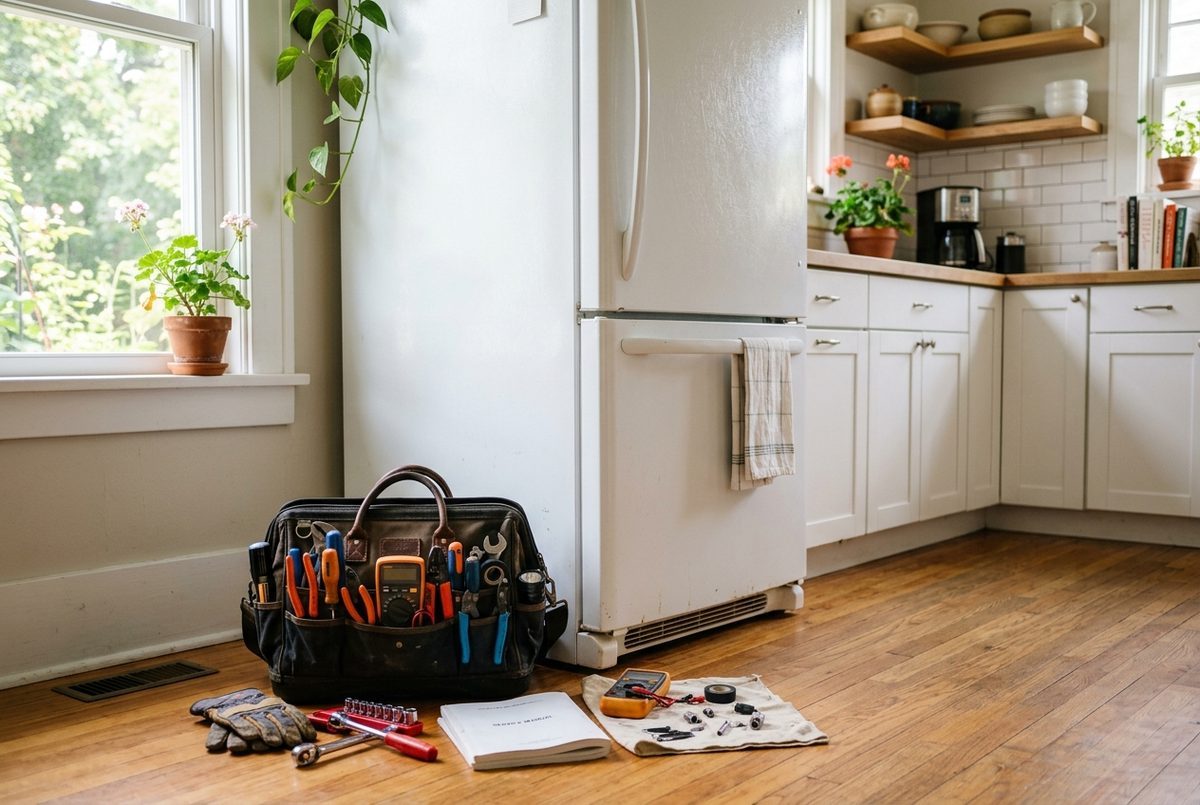
M&G Appliance Repair service team · field-reviewed before publishing
Spring: storms, power blips, and tornado season
March through May is when the phone rings hardest. Lightning and grid flicker hit control boards. A washer that lights up but won't start, an oven with a dark display, a fridge that clicks and quits, those often trace back to a surge rather than wear. Basement laundry rooms flood too, and a soaked motor rarely comes back the same. Before storm season, plug sensitive appliances into a good surge protector. Move the washer and dryer off the floor if your laundry area takes water. If lightning hits close, unplug the fridge for a minute, then plug it back in and listen for the compressor to start.
Summer: heat that never lets up
Attic-hot garages and laundry rooms are rough on refrigerators and freezers. A garage fridge fights 100-degree air with the same small compressor it uses indoors. Condenser coils packed with dust and pet hair can't shed heat, so the unit runs almost nonstop and the freezer starts frosting over. Ice makers fall behind, and dryers in unvented rooms take forever. Pull the fridge out and vacuum the coils in June. Check that the dryer vent hood outside flaps open and isn't crushed or full of lint. Give any fridge a few inches of breathing room on the back and sides.
Fall: the heavy-use switch
October is when the oven wakes up after months off. That's when you find the bake element quit, or the door gasket is torn, or the temperature runs 50 degrees cool. Test it in early fall, not the day before a holiday meal. Run the oven at 350 with a separate thermometer inside and see where it lands. Same goes for the dishwasher, since leaks and drain issues show up once you're running it daily again. Wipe the door seal, pull the bottom rack, and clear food out of the filter basket. Small stuff now beats a cold kitchen in November.
Winter: freezes, cold garages, and cracked lines
A hard freeze in the South-Central states catches people off guard. Water lines to garage refrigerators and utility-room washers can freeze and split. When they thaw, you get a puddle. Garage freezers have the opposite summer problem: some models won't run correctly below about 40 degrees, so the compartment thaws while the light still works fine. Dryers in unheated spaces take longer because the intake air is cold and damp. Before the first freeze, insulate exposed supply lines and learn where your shutoff is. Shut the washer valves off if you're leaving town.
Well water and sediment, all year long
Plenty of homes we visit run on a well, and fine sand and iron do slow damage. Dishwashers get gritty spray arm holes and cloudy glasses. Washer inlet screens clog and the tub fills at a trickle. Ice makers make small, hollow cubes or stop filling at all. Water heaters and fridge filters load up faster than the manual assumes. Twice a year, run a cleaner cycle through the dishwasher and check that the spray arms spin freely. Change the fridge water filter on schedule even if the water still tastes fine. If your fill is slow, tell us. The inlet screen is a common culprit.
When it's worth fixing and when it's time to swap
We install as well as repair, so we'll tell you straight. A ten-year-old fridge with a bad start relay is worth fixing. That same fridge with a leaking sealed system usually isn't. Dryers are often the easy call, since heating elements, belts, and thermal parts are straightforward. Front-load washers with bearing noise are a bigger conversation. Ovens depend on whether it's an element or a burned control. Age, the specific part, and how the rest of the machine looks all matter. Call us and describe the symptom. We'll give you the honest math before anybody hauls anything out.
How the Seasons Wear on Home Appliances — what people ask
Is my garage refrigerator going to make it through an Arkansas summer?
It can, with help. Vacuum the condenser coils, leave clearance around the back, and keep the door closed during the hottest hours. If the freezer frosts up or the compressor never cycles off, have it looked at.
Can a power flicker really kill an appliance?
Yes. Modern washers, dryers, ovens, and refrigerators run on control boards, and a surge or brownout can damage them. You might see a dead display, a cycle that won't start, or a unit that resets itself. Surge protection helps.
How often should I clean my dryer vent?
Once a year for most homes, more often with a long duct run or a big family. You're overdue if clothes come out damp after a full cycle, the laundry room gets hot, or you smell something burning near the drum.
How it works
- Step 1
Tell us the symptom
Describe what you hear, see, or smell. Grinding, leaking, no heat, an error code on the panel. Those details let us load likely parts on the van before we ever pull into your driveway.
- Step 2
We diagnose in person
Our technician tests the machine, checks power and water lines, and finds the part that actually failed. Well-water sediment and clogged valves fool a lot of guesswork. We confirm the cause before touching a wrench.
- Step 3
Fix it or swap it
You get the honest read. Some machines need one part and have years left in them. Others are worn past sense. Because we also install, we can set the replacement level and connected on the same visit.
- A real person answers
- Open 7 days
- Written quote before work starts
Why homeowners call us
- Two families, one crewWe are not a call center routing tickets to strangers. The person answering the phone knows the technicians by name, and you get the same small group of hands in your kitchen and laundry room every time.
- Straight swap-vs-fix talkInstallers see what breaks in year two. Repair techs see what lasts a decade. We do both, so we will tell you when a repair makes sense and when your money belongs in a new machine instead.
- Storm season readyTornado season brings surges, outages, and flooded utility rooms. Control boards fry, and motors seize after water sits. We stock common boards and dry-run every machine before we leave, so you are not calling us back next week.
- Well water experienceSediment and hard minerals wreck inlet valves, dishwasher jets, and ice makers. We see it constantly out past the city lines. We clean, we replace, and we show you the filter habit that keeps the same failure from coming back.
- All major brands, gas & electricEvery major appliance brand, gas and electric, handled by an independent shop.
- Straight answersIf it isn't worth repairing, we'll say so, often right on the phone.
About this guide
Checked everything on the list and it still acts up?
Tell us what you tried and what it did. The booking itself takes a minute.
- A real person answers
- Open 7 days
- Written quotes
- All major brands
- Gas & electric
Rather not call? Get a free quote →